 English
  Português do Brasil
 Brazil, with its vast territorial expanse and natural wealth, is often described as a country of continental dimensions. However, a deeper analysis of its trade balance reveals an even more striking truth: Brazil is not just a country, but a global commodities portfolio disguised as a territory. This perspective, though provocative, is fundamental to understanding the dynamics of its exports, the forces that drive them, and the strategic challenges that lie ahead.
Data from the Secretariat of Foreign Trade (Secex) for 2025 are eloquent: US$ 348.7 billion exported—an impressive volume sustained by highly efficient and, notably, concentrated production chains. This concentration manifests not only in products but also in destinations, with one buyer in particular exercising a dominant influence.
Brazil as a global commodities portfolio
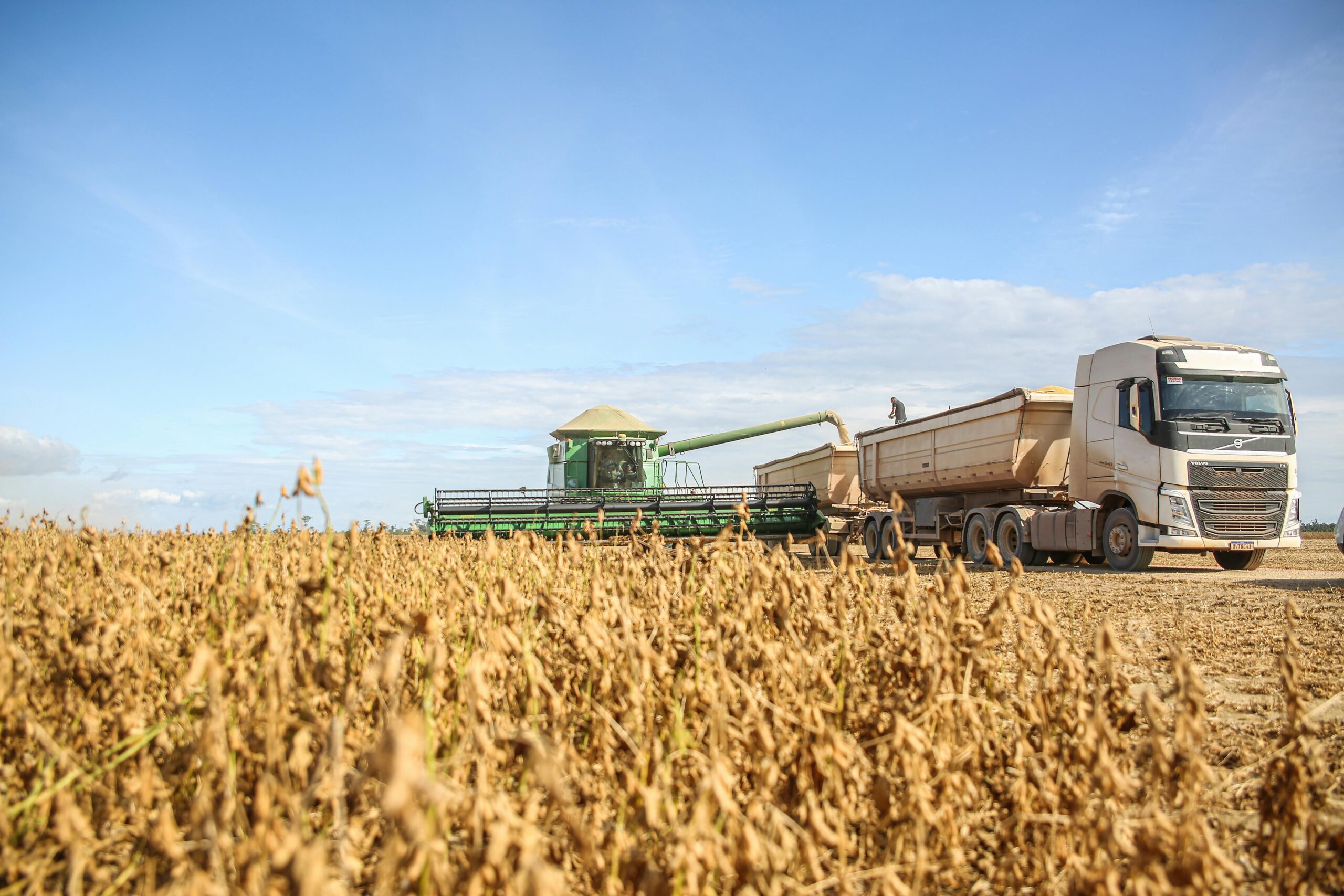
The idea that Brazil operates as a commodities portfolio means its export economy is intrinsically linked to the large-scale production and sale of raw materials and agricultural products to the international market. This characteristic grants the country the role of a strategic supplier of essential resources energy, food, and industrial inputs for global supply chains. It is a game of high volume and high dependency, where external demand dictates the pace of internal production.
Who buys what?
An analysis of the main products exported by Brazil in 2025 and their destinations reveals a remarkable level of concentration, with China emerging as the primary engine for much of this trade flow. The following table illustrates this dynamic:
| Exported commodity | Primary destination | Estimated value (2025) | Main Observations |
| Soybeans | China | ~US$ 67–70 billion | More than 70% of Brazilian soy is absorbed by China. |
| Sugar | China | ~US$ 18–20 billion | Brazil is the largest global supplier; players like Raízen and São Martinho. |
| Coffee | United States | ~US$ 9–10 billion | Higher added value; involvement of companies like Cooxupé. |
| Cotton | China | ~US$ 4–5 billion | Vietnam and Bangladesh are also relevant destinations. |
| Beef | China | ~US$ 12–13 billion | China dictates the pace of the sector. |
| Poultry | China | ~US$ 9–10 billion | Strong presence in the halal market, with BRF leading. |
| Iron Ore | China | ~US$ 30–32 billion | Base of global industry; absolute protagonism of Vale. |
| Oil (Petroleum) | China | ~US$ 40–45 billion | One of the largest growth vectors; Petrobras at the center. |
| Cellulose (Pulp) | China | ~US$ 10–11 billion | Essential for industrial chains; Suzano and Klabin as leaders. |
It is evident that China is not merely a trading partner, but a dominant buyer that shapes the structure of several Brazilian production chains. While this dependency brings significant volumes, it also raises a red flag regarding risk management.
Where Does Production Happen?
This concentration of commodities is directly reflected in Brazil's economic geography. It is not a homogeneous distribution, but a regional specialization that drives the economies of entire states:
• Mato Grosso and Goiás: Driven by soybean production.
• Pará and Minas Gerais: Anchored in iron ore extraction.
• São Paulo: Dominating with sugar and its derivatives.
• Paraná: Balancing soybean and animal protein production.
• Rio de Janeiro: Strong presence in oil exports.
• Bahia: Contributing with soy and cotton.
• Espírito Santo: Notable for coffee and ore.
• Rio Grande do Sul: Strong in soy and meats.
This distribution is not merely geographical; it is the representation of a global engine operating within a single country. Each region specializes to meet specific international market demands, creating a highly interconnected and efficient productive ecosystem.
Implications of a concentrated model
The fact that the world does not buy "from Brazil" in a generic sense, but rather from specific chains and in many cases, with a single dominant buyer radically changes the dynamics of Brazilian foreign trade:
• Bargaining Power: The concentration of buyers can limit Brazil's bargaining power in price negotiations and commercial terms, especially when a single country represents the bulk of the demand.
• Price Formation: Prices for many Brazilian commodities are heavily influenced by the demand and policies of the main buyer, making Brazil more susceptible to international market fluctuations.
• Geopolitical Risk: Dependence on a single destination for strategic commodities increases geopolitical risk. Trade tensions, foreign policy shifts, or economic crises in the buying country can have severe and immediate impacts on the Brazilian economy.
• Strategy: This requires a strategy of market diversification and adding value to products to reduce vulnerability and increase the resilience of the trade balance.
The Current Scenario (2026) and the Future
The first quarter of 2026 has already made history, with Brazil recording simultaneous records in exports, imports, and total trade turnover. US$ 82.3 billion were exported in just three months, demonstrating the sector's strength. Once again, China remains at the center of this system, consolidating its position as the primary trading partner.
Brazil is not just exporting; it is sustaining entire global chains of energy, food, and industrial inputs. Few countries in the world have this weight and the capacity to influence global supply. This reality demands reflection: while Brazil already plays the global game on a massive scale, how many Brazilian companies still "think small" within this scenario, failing to fully explore the opportunities and challenges this strategic position offers?
Conclusion
The analysis of the Brazilian export portfolio reveals a nation with an irreplaceable role in the global supply of commodities. However, this strength is accompanied by a concentration that requires vigilance and strategic planning. For the future, the challenge for Brazil and its companies will be to balance the efficiency of existing chains with the pursuit of greater diversification, value addition, and risk reduction. Understanding who really controls Brazilian exports is the first step toward building a more robust, resilient foreign trade strategy aligned with the complexities of the global landscape.
Avoid mistakes when importing!
Having a specialized import consultancy can save you from many future risks. See what Genco Import & Export can do for you:
- Sourcing your product to find the best value for your product.
- Simulating all costs before you embark on this journey.
- Negotiating values with suppliers, freight forwarders, and customs brokers.
- Unifying all documents. Less headache for you!
- Closing the exchange rate for your process.
- Conducting inspections and issuing complete reports for your follow-up.
And much more!
Count on Genco for the best advisory for your imports.
Contact us and learn more about our services!