 English
  Português do Brasil
 In the world of foreign trade and global logistics, the efficiency and safety of maritime transport are fundamental pillars. Every day, giant container ships and oil tankers cross the oceans, moving millions of tons of goods. But have you ever stopped to think about the complexity behind a seemingly simple maneuver, such as braking one of these colossal vessels?
The answer is surprising and lies in the interaction between fluid physics, the immense mass of these structures, and, above all, the relentless force of inertia. Unlike a car that can stop in just a few meters, a ship needs kilometers of distance to come to a halt.
The physics of ship braking: inertia and water resistance
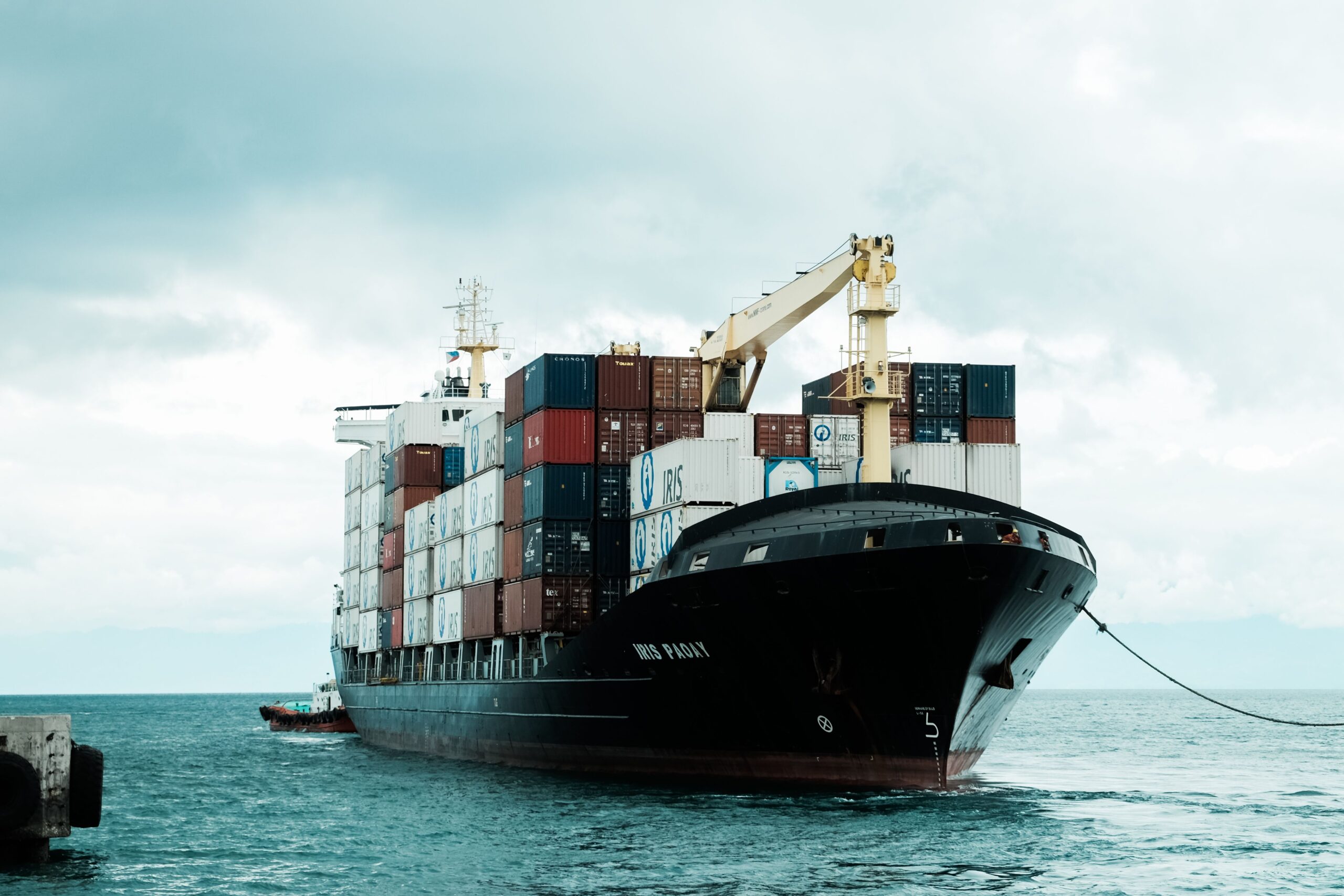
Imagine a 100,000-ton container ship cruising at top speed. For it to come to a complete stop, it needs about three kilometers of distance. The situation becomes even more dramatic with a large-scale oil tanker. Traveling at approximately 15 meters per second (equivalent to 54 kilometers per hour), a tanker can require an impressive 20 kilometers for a full stop—a distance comparable to 200 city blocks!
This colossal braking distance is not a mere detail; it is a critical factor that shapes navigation and maritime safety strategies. The kinetic energy generated by the combination of the speed and mass of these vessels is gigantic, and water resistance, although present, is not enough for a rapid deceleration.
Implications for maritime safety and logistics
Reaction time and limited braking capacity create a scenario of constant alert. If an obstacle—be it an iceberg, another vessel, or a rock formation—is detected just a few kilometers away, a collision becomes mathematically inevitable. This highlights the vital importance of advanced navigation systems, long-range radars, and, above all, the expertise and training of the crews.
The complexity of ship braking is a constant reminder that global logistics is an orchestra of interconnected factors, where physics and engineering play crucial roles in ensuring that goods reach their destination safely and efficiently.
Conclusion
A ship's braking is an impressive testament to the scale and complexity of naval engineering. Far from being an instantaneous action, it is a process that demands meticulous planning, advanced technology, and a deep respect for the laws of physics. By understanding these giants of the seas, we better comprehend the challenges and innovations that drive foreign trade and the global economy.
Avoid mistakes when importing!
Having a specialized import consultancy can save you from many future risks. See what Genco Import & Export can do for you:
- Sourcing your product to find the best value for your product.
- Simulating all costs before you embark on this journey.
- Negotiating values with suppliers, freight forwarders, and customs brokers.
- Unifying all documents. Less headache for you!
- Closing the exchange rate for your process.
- Conducting inspections and issuing complete reports for your follow-up.
And much more!
Count on Genco for the best advisory for your imports.
Contact us and learn more about our services!